
Most people look at a roof and see a roof. Wheatcroft looked at theirs and saw a quiet opportunity that had been sitting in daylight for years.
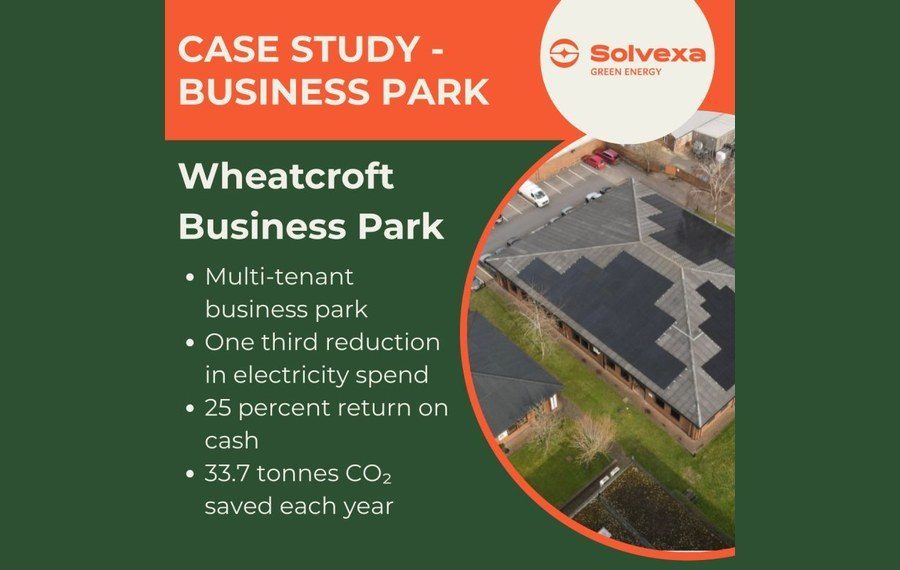
Their aims were simple. Lower energy costs. A stronger environmental profile. No disruption for the tenants working below.
Why business parks suit solar
Business parks tend to suit solar rather well. Plenty of space. Predictable daytime activity. A system that gets on with its job without drawing attention to itself.
The multi-tenant aspect adds a wrinkle worth planning for: who consumes the generation, how it is metered, and how the benefit is shared or reflected in service charges. Sorted out early, it is administrative. Sorted out late, it becomes an argument.
What Wheatcroft gained
- Lower daytime reliance on the grid
- A clear payback period backed by measured data
- A 25% return on cash
- A one-third reduction in electricity spend across the site
- 33.7 tonnes of carbon saved each year, equal to planting around 1,548 trees
- A much lower price per kilowatt hour for the next twenty-five years
Installed around the tenants
The installation ran around tenant hours through early starts and steady communication. Nothing noisy. Nothing messy. Business as usual.
We are already supporting Wheatcroft with their next system on a larger roof. With those returns, the maths made the decision fairly easy.
Sometimes the smartest part of a building is the bit no one ever talks about.
Wondering what your own roof could support? We will model it against your half-hourly data and tell you straight.
Get a free assessment