
When a business installs solar, it is not buying panels. It is committing a roof, a balance sheet and a maintenance schedule to a single asset for the next twenty years or more.
That timescale is the reason we are specific about the equipment we specify. A panel is a fairly commoditised thing. What sits behind it — how power is converted, how faults are detected, how the array behaves when someone needs to work on it — is where the differences show up, and they show up slowly. On most commercial sites we design, that layer is SolarEdge.
Optimisers change what one bad panel costs you
In a conventional string system, panels are wired in series and the string is governed by its weakest member. Shade a corner of one module with a flue, a parapet or an aerial, and the whole string drops with it. On a clean, unobstructed south-facing roof that rarely matters much. On a real commercial roof — with plant, rooflights, mixed pitches and neighbouring buildings — it matters a great deal.
A DC optimiser on each module lets that module find its own operating point. One shaded panel gives up its own output and nothing more. In practice this does two things: it recovers yield that a string design would have lost, and it makes complicated roofs viable. We can follow the geometry of a building rather than fitting the array to whatever keeps the strings uniform.
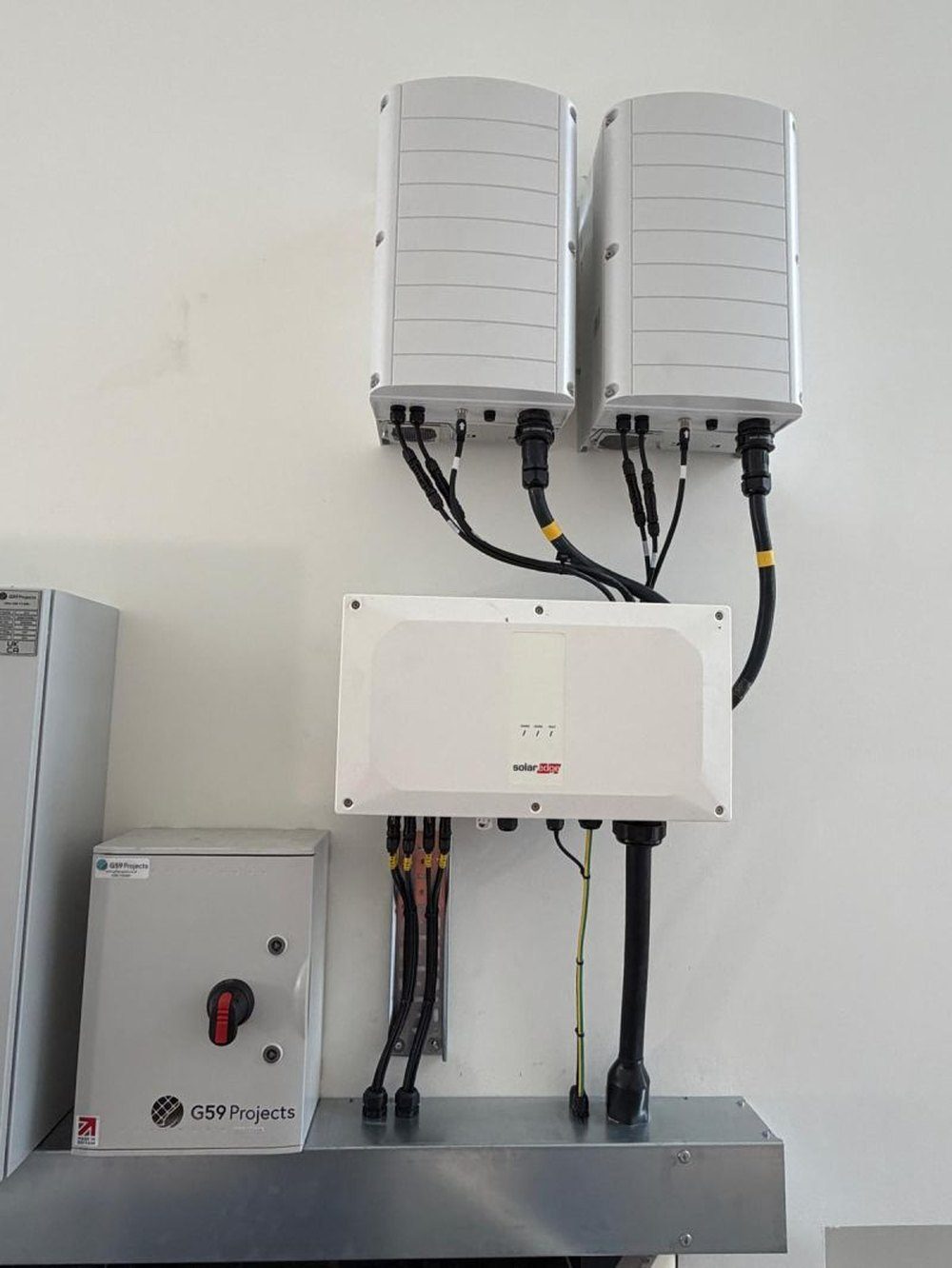
You cannot maintain what you cannot see
Most solar systems fail quietly. Output drifts down by a few per cent, then a few more, and unless somebody is watching the right number, nothing announces it. A failed module in a string of twenty is invisible on a monthly generation total.
Module-level monitoring removes that problem. Every panel reports individually, so a single underperforming module is identifiable by position on the roof rather than by an afternoon of testing. That changes maintenance from reactive to planned: we can tell a client which panel, on which pitch, needs attention, and fold it into a scheduled visit instead of an emergency one.
It also settles arguments. When a system underperforms against its model, the data tells you whether the cause is soiling, shading, a hardware fault or simply a duller-than-average quarter. That is a more useful conversation to have with a finance director than an estimate.
The safety case, and why insurers are asking about it
A conventional PV array is live whenever there is daylight on it. The DC cabling between the panels and the inverter can sit at several hundred volts, and switching the building off does not change that. For anyone working on the roof — and for the fire service, who may have to make a decision about a burning building with an unfamiliar array on top of it — that is a live consideration.
SafeDC addresses it directly. When the system is shut down, the optimisers drop the DC voltage of each module to a touch-safe level, and the array stops being a hazard rather than merely being switched off. Alongside it sit arc-fault detection and thermal monitoring, which look for the early electrical signatures of a developing fault rather than its consequences.
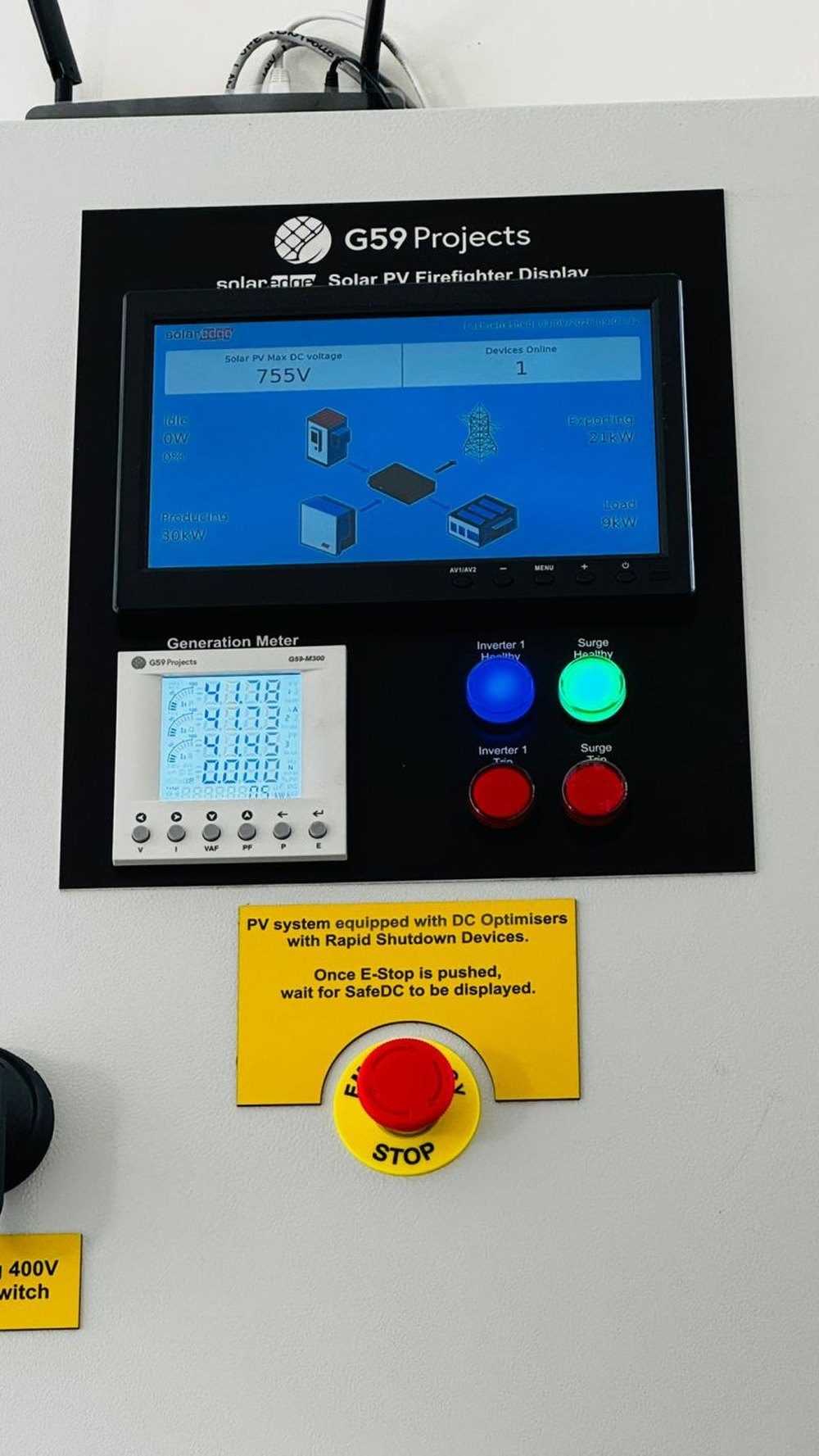
The picture above is the practical end of that. A responder arriving at the building can read the array’s maximum DC voltage, see what it is generating, and press one clearly labelled control. The sign tells them what to expect afterwards. None of that requires them to understand the system.
This is also, increasingly, a commercial question rather than only an engineering one. Property insurers have become noticeably more interested in how rooftop PV is specified, and rooftop arrays now attract underwriting scrutiny that they did not a decade ago. Where a client’s insurer has views on isolation, arc detection or firefighter access, we would rather be able to answer them at design stage than retrofit an answer later.
Room to add things later
Very few of the businesses we work with want solar and nothing else, permanently. Battery storage moves onto the agenda when export prices soften or when a site starts looking at resilience. EV charging arrives when the fleet does.
Specifying a platform that accommodates both means the second phase is an addition rather than a rebuild. It is a quiet advantage, and it tends to be appreciated three years after handover rather than on the day.
A 20-year decision deserves equipment chosen on 20-year criteria: what it yields, what it tells you, and how safe it leaves the roof for whoever works on it next.
What this means for our clients
Put together, it comes to something fairly simple. More of the energy that lands on the roof reaches the meter. Problems are found by the monitoring rather than by the annual figures. The array can be made safe by someone who has never seen it before. And the system can grow without being taken apart.
That is the standard we think a commercial installation should be held to, and it is why we make the specification decision the way we do.